
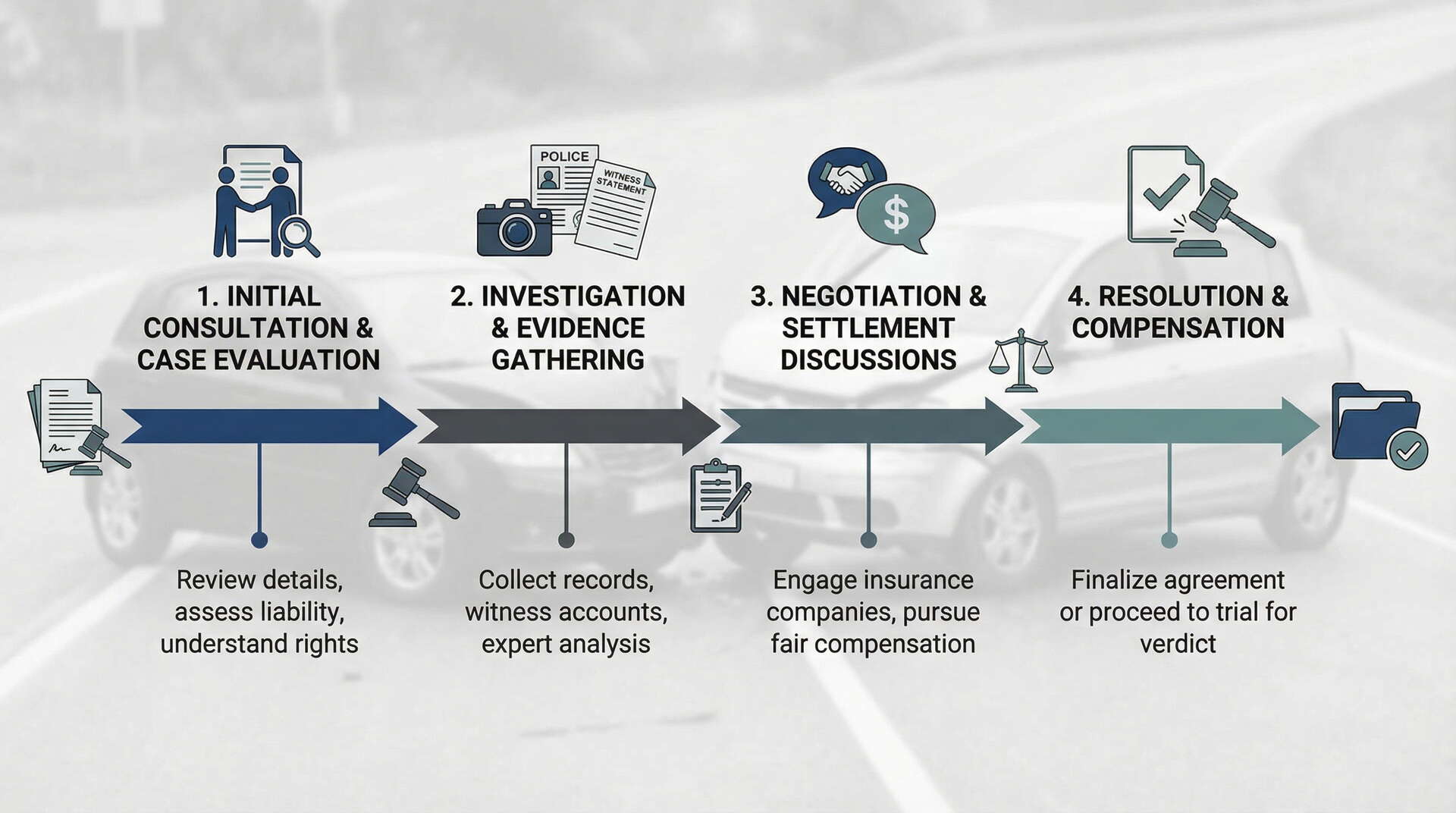
Car Accident Lawsuit Timeline: Step-by-Step Guide to What Happens Next
Quick Summary: The aftermath of a car accident can be a disorienting and overwhelming experience. Beyond the immediate shock and potential physical pain, victims often face a complex web of insurance claims, medical treatments, and the daunting prospect of a legal battle. Understanding the car accident lawsuit process and what to expect is crucial for navigating this challenging period and ensuring your rights are protected. This guide provides a clear, step-by-step roadmap from the moment of collision to potential resolution, empowering you with the knowledge to seek the compensation you deserve.
The Immediate Impact: Beyond the Collision
A car accident is more than just the impact of metal and glass. It’s an event that can profoundly disrupt lives, leading to physical injuries, emotional trauma, and significant financial strain. The moments and days following a collision are critical for both immediate well-being and the future trajectory of any potential legal claim.
Injury-only motor vehicle crashes per year (NHTSA)
Statute of limitations (post-July 2024)
Car accident claims in the U.S. annually
Why Understanding the Car Accident Lawsuit Process Matters
For an auto accident injury victim, the legal process can seem like an opaque and lengthy ordeal. Knowing the typical stages and their approximate timelines helps manage expectations, reduces anxiety, and allows you to focus on recovery. It provides a framework for understanding what happens next, why certain steps are necessary, and when you can anticipate certain developments.
This knowledge empowers you to make informed decisions and work effectively with your legal team. Understanding the lawsuit process is key to recovering damages—which can be substantial, as car accidents are the leading cause of personal injury claims in 2025, accounting for over 50% of cases in the U.S.
Louisiana Law: Understanding Your Rights After a Car Accident
Louisiana’s Comparative Fault System: La. C.C. Art. 2323
Louisiana operates under a pure comparative fault system codified in Louisiana Civil Code Article 2323. This is fundamentally different from many other states and significantly impacts how car accident lawsuits proceed.
Under Louisiana Civil Code 2316, a person is responsible for any injuries or damage they cause to someone else because of a callous act, negligence, lack of skills, or recklessness. Article 2323 expands this by incorporating comparative fault—meaning you can still recover compensation even if you were partially at fault for the accident.
How It Works: If a jury determines you were 20% at fault for the accident and your total damages are $100,000, your compensation would be reduced by 20% to $80,000. Unlike “modified comparative fault” states that bar recovery if you’re 50% or more at fault, Louisiana’s pure system allows you to recover damages even if you’re 99% at fault—though your recovery would be reduced to just 1% of the total damages.
Critical Deadline: Louisiana’s statute of limitations for car accident lawsuits was historically one year. However, for injuries occurring on or after July 1, 2024, the deadline has been extended to two years from the date of the accident. For injuries before that date, the one-year deadline still applies. Missing this deadline means you forfeit your right to sue permanently.
Why This Matters: Insurance companies will use comparative fault to minimize your payout by arguing you share substantial blame. An experienced New Orleans car accident lawyer knows how to counter these tactics, present evidence that minimizes your percentage of fault, and maximize your recovery.
The Critical Role of a Personal Injury Attorney from Day One
From the very first moments after an accident, the presence of a skilled personal injury attorney can be invaluable. While you may be focused on immediate medical needs, an attorney can begin the crucial work of preserving evidence, protecting your rights, and initiating the claims process. They are adept at navigating the complexities of dealing with insurance companies, which often prioritize minimizing payouts. A qualified car accident attorney acts as your advocate, ensuring that all necessary steps are taken to build a strong case and pursue fair compensation for your injuries and losses.
Phase 1: Immediate Actions After the Accident (Days 0-7)
The initial days following a car accident are a whirlwind of activity and critical decision-making. What you do in this period can significantly impact the outcome of your case.
Prioritizing Safety and Seeking Medical Attention
Your health and safety are paramount. After ensuring the immediate scene is safe, or once first responders arrive, seek medical attention, even if you believe your injuries are minor. Some serious injuries, like whiplash or internal bleeding, may not manifest symptoms immediately. Failing to get prompt medical evaluation can be interpreted by insurance companies as a sign that your injuries were not severe. Your medical records and bills will form a cornerstone of your claim, documenting the extent of your injuries and the costs associated with your recovery.
Gathering Initial Evidence at the Scene
If you are able, gather as much evidence as possible at the accident scene:
- Take photographs of the vehicles, surrounding area, road conditions, and any visible injuries
- Collect contact information from witnesses
- Note the date, time, and location of the accident
- Obtain a copy of the police report if one is filed
This initial evidence is vital for establishing the facts of the car accident and determining fault. Detailed scene evidence can help prove negligence, especially in cases involving distracted driving, which accounted for 8% of all fatal accidents in 2022.
Reporting the Accident and Notifying Your Insurer
Report the accident to your insurance company promptly, as required by your policy. However, be cautious about what you say. Avoid admitting fault or speculating about the cause. Stick to the basic facts. It’s often advisable to have your attorney handle all communications with the insurance company to prevent missteps that could jeopardize your claim. The insurance company will assign an adjuster to your case, and their primary goal is to settle the claim for as little as possible.
Phase 2: Building Your Case & Initial Investigation (Weeks 1-8)
Once the immediate crisis has passed, the focus shifts to systematically building a strong case to support your claim.
Consulting and Retaining a Qualified Car Accident Attorney
This is the opportune time to consult with a qualified car accident attorney. Many offer free initial consultations. A reputable personal injury lawyer will assess the details of your case, explain your legal options, and guide you through the process. Retaining an attorney ensures that your rights are protected and that the complexities of litigation are handled by experienced professionals.
The Attorney’s Thorough Investigation Begins
Your attorney will launch a comprehensive investigation into your auto accident. This involves gathering all available evidence, including police reports, witness statements, photos, and videos. They will also begin securing your medical records and treatment history to fully document the extent of your injuries. This thorough investigation is crucial for understanding the cause of the accident and establishing negligence.
Understanding the Statute of Limitations for Your Case
Every legal claim has a deadline, known as the statute of limitations. In Louisiana, for car accidents occurring on or after July 1, 2024, you have two years from the date of the accident to file a lawsuit. For accidents before that date, the deadline is one year. These deadlines are strictly enforced—missing them means you forfeit your right to sue. Your attorney will ensure your claim is filed well within the applicable statute of limitations.
Phase 3: The Insurance Claim & Pre-Litigation Negotiation Process (Months 1-6+)
This phase often involves extensive communication with the insurance company and a concerted effort to reach a fair settlement before resorting to a lawsuit.
Communicating with Insurance Adjusters
It’s best to let your attorney handle all communication with the insurance adjusters. They understand the tactics adjusters may use and can ensure that your statements do not inadvertently harm your case. The adjuster’s job is to assess liability and damages, but their incentive is to minimize the payout from the insurance company.
Comprehensive Medical Evaluation
Your attorney will work with you to ensure you receive all necessary medical treatment. This includes addressing immediate injuries and any long-term or chronic conditions. Comprehensive medical documentation is essential and might involve specialist evaluations to fully assess the impact of your injuries.
Crafting and Submitting the Demand Letter
Once your medical treatment has stabilized, your attorney will draft a demand letter. This formal document outlines the accident facts, details your injuries, explains how negligence led to the crash, and presents a monetary demand for settlement. It will be supported by all gathered evidence, including medical records, bills, and expert opinions.
Initial Settlement Negotiations
Following submission of the demand letter, the insurance company will review it and may respond with a counteroffer. Your attorney will skillfully negotiate, aiming to secure a fair settlement that adequately compensates you for medical expenses, lost wages, pain and suffering, and other damages. The National Safety Council estimates the median settlement for motor vehicle accident cases is $35,000, with high-severity cases exceeding $75,000.
When Settlement Fails: Preparing for Litigation
If negotiations stall or the insurance company’s settlement offer is unreasonably low, your attorney will advise on the next steps, which may include filing a lawsuit. This decision is made based on the strength of your case and the likelihood of achieving a better outcome through litigation.
Phase 4: Filing a Car Accident Lawsuit (Months 6-12+)
If a pre-litigation settlement cannot be reached, the formal legal process of filing a lawsuit begins.
Deciding to File a Complaint
The decision to file a lawsuit is significant. Your attorney will prepare and file a formal legal document called a complaint. This complaint officially initiates the civil lawsuit, outlining the parties involved, the basis of the claim, and the relief sought. It details how the defendant’s negligence caused your injuries and damages.
Understanding Jurisdiction and Venue
When filing a lawsuit, it’s essential to determine the correct jurisdiction and venue. Jurisdiction refers to the court’s authority to hear the case, while venue refers to the specific geographic location where the lawsuit can be filed. These are typically determined by where the accident occurred or where the defendant resides. Navigating the court system requires an understanding of these legal principles.
The Defendant’s Formal Response to the Complaint
Once the complaint is filed, it must be formally served on the defendant(s). The defendant then has a specific period to file a formal response, known as an answer. In their answer, they will admit or deny the allegations made in the complaint and may raise affirmative defenses. This formal exchange begins the active litigation phase.
Phase 5: The Discovery Process (Months 6-24+)
Discovery is a crucial phase where both sides gather information and evidence from each other.
What is the Discovery Process?
The discovery process is a formal procedure in litigation where parties exchange information and evidence relevant to the case. Its purpose is to ensure that both sides have a clear understanding of the facts and evidence before trial, encouraging fair settlements and preventing surprises. This discovery phase can be extensive and is often the longest part of a lawsuit.
Written Discovery: Interrogatories and Requests for Production
Written discovery includes interrogatories, which are written questions that must be answered under oath, and requests for production of documents. Your attorney will likely receive interrogatories and requests for documents from the defendant, and they will also send them to the opposing party. This is a primary method for uncovering key evidence, such as accident reports, insurance policies, and medical histories.
Depositions: Testimony Under Oath
Depositions involve questioning parties and witnesses under oath outside of court, with a court reporter present to create a transcript. Your attorney will depose the at-fault driver and potentially other witnesses. You may also be deposed by the defendant’s attorney. This process allows each side to assess the credibility of witnesses and gather sworn testimony.
Independent Medical Examinations (IMEs)
The defendant’s insurance company may request that you undergo an independent medical examination (IME) with a doctor of their choosing. This is a medical evaluation intended to allow the defense to obtain their own assessment of your injuries and their impact. It is crucial to attend these appointments and be forthright with the examining physician.
Phase 6: Pre-Trial & Alternative Dispute Resolution (Months 18-36+)
As discovery concludes, the focus often shifts back to negotiation, with formal mediation and arbitration becoming viable options.
Continued Settlement Negotiations
Even after a lawsuit has been filed, settlement negotiations can continue throughout the litigation process. As more evidence is gathered during discovery, both parties gain a clearer picture of the strengths and weaknesses of their case, which can facilitate further settlement discussions. The threat of a trial can also motivate parties to reach a compromise.
Phase 7: Trial (If Necessary) (Months 24-48+)
If all attempts at settlement fail, the case will proceed to trial.
The Trial Process
A trial involves presenting evidence and arguments before a judge or jury. This includes jury selection, opening statements, presenting witness testimony and evidence, cross-examination by opposing counsel, and closing arguments. The judge or jury will then deliberate and render a verdict. The complexity of proving negligence in contested cases often necessitates a trial, where an experienced Louisiana auto accident attorney can present your case effectively.
Phase 8: Post-Resolution & Final Steps
The conclusion of a trial or a settlement agreement brings the case to its final stages.
Finalizing Settlements and Judgments
Once a settlement is reached or a verdict is rendered, the final steps involve paperwork and payment. For settlements, this includes signing releases and agreements. For verdicts, it may involve post-trial motions or appeals. Your attorney will manage this process to ensure you receive the compensation owed to you.
Factors Influencing the Timeline
It’s important to recognize that the timeline for a car accident lawsuit is not fixed. Several factors can influence how long the process takes:
- Severity of Injuries: Cases involving severe or catastrophic injuries requiring extensive medical treatment naturally take longer
- Complexity of the Case: Accidents with multiple vehicles, unclear liability, or multiple defendants can prolong the process
- Insurance Company Tactics: Some insurance companies employ delaying tactics to extend negotiations and litigation
- Court Congestion: The caseload in a particular court system can affect how quickly your case progresses
- Attorney Experience: An experienced attorney can navigate complexities more efficiently
- State Laws: Different states have varying legal procedures and statutes of limitations
Frequently Asked Questions About Car Accident Lawsuits
The timeline varies significantly. Simple cases may settle in 3-6 months, while complex litigation can take 2-4 years or longer. Factors include injury severity, case complexity, court congestion, and whether the case goes to trial.
For accidents on or after July 1, 2024, you have two years from the date of the accident to file. For accidents before that date, the deadline is one year. Missing this deadline permanently bars your claim.
Yes. Louisiana’s pure comparative fault system allows you to recover damages even if you were 99% at fault, though your compensation is reduced by your percentage of fault. If you were 30% at fault and suffered $100,000 in damages, you’d recover $70,000.
While not legally required, hiring an experienced attorney significantly increases your chances of fair compensation. Attorneys understand Louisiana’s complex comparative fault laws, know how to counter insurance company tactics, and can navigate the litigation process effectively—typically recovering substantially more than victims who represent themselves.
Conclusion: Taking Control of Your Recovery
Navigating a car accident lawsuit is a complex journey, but understanding the step-by-step timeline can transform it from a daunting unknown into a manageable process. From immediate actions at the accident scene to the intricate discovery phase and potential trial, each stage plays a vital role in seeking justice and fair compensation.
The importance of gathering evidence, prioritizing medical recovery, and securing experienced legal representation cannot be overstated. While the timeline can be lengthy and influenced by numerous factors, with the guidance of a dedicated personal injury attorney in New Orleans, you can effectively advocate for your rights and work towards a satisfactory resolution, ensuring that your medical bills, lost income, and pain and suffering are adequately addressed.
If you have been involved in a car accident, taking prompt, informed action is the first step toward recovery and resolution. Don’t let insurance companies minimize your claim or Louisiana’s statute of limitations run out. Contact an experienced attorney today to protect your rights and maximize your compensation.
Injured in a Car Accident? Call Sean Regan 24/7
(504) 888-7777Free Consultation • No Fees Unless We Win • Experienced Louisiana Representation