What To Do If You Were Not At Fault in a Car Accident: Essential Steps to Protect Your Rights
Quick Summary: A car accident is a disorienting and often upsetting experience, especially when you know you are not the one responsible. The moments following an incident can feel chaotic, but taking precise, deliberate steps can significantly impact your ability to recover physically, financially, and emotionally. While the other driver’s actions may have caused the collision, your response afterward is crucial for protecting your rights and ensuring fair compensation for any damages or injuries sustained. This guide outlines the essential actions to take when you find yourself in this situation, transforming a stressful event into a manageable process of recovery.
Understanding Your Position: The Advantage of Being the Non-At-Fault Driver
Being the non-at-fault driver in a car accident provides a significant advantage when it comes to filing an insurance claim and seeking compensation. In most jurisdictions, the party responsible for causing the collision is liable for the damages and injuries incurred by others. This means you are generally entitled to have your vehicle repair costs, medical expenses, lost wages, and other losses covered by the at-fault driver’s insurance company.
For car accident cases in 2025
Drivers in 2023 (1 in 3)
Average auto liability claim in 2024
Recognizing this position empowers you to focus on documenting the incident accurately and pursuing a fair resolution, rather than dealing with the complexities of proving your own negligence or mitigating damages for which you are responsible. This clarity simplifies the path to recovery.
Louisiana Law: Understanding Pure Comparative Fault
Louisiana’s Comparative Fault System: La. C.C. Art. 2323
Even when you’re not at fault, understanding Louisiana’s comparative fault laws is critical. Louisiana follows a pure comparative fault system under Louisiana Civil Code Article 2323, which governs how damages are allocated when multiple parties share responsibility for an accident.
Under this system, you can recover compensation even if you bear some responsibility for the accident—your recovery is simply reduced by your percentage of fault. For example, if you’re found 10% at fault and have $100,000 in damages, you’d recover $90,000.
IMPORTANT: 2026 Tort Reform Changes
Starting January 1, 2026, Louisiana will implement a modified comparative fault system. Under the new law (House Bill 431), drivers found to be 51% or more at fault will be barred from recovering any damages. If you’re less than 51% at fault, you can still recover, but your compensation will be reduced by your percentage of fault. This represents the largest tort reform in Louisiana history.
Why This Matters for You: Insurance companies will aggressively try to assign blame to you—even when you’re clearly not at fault—to reduce their payout. They may claim you were speeding, distracted, or failed to avoid the accident. An experienced New Orleans car accident attorney can counter these tactics and protect your right to full compensation.
Immediate Actions at the Accident Scene: Securing Your Claim’s Foundation
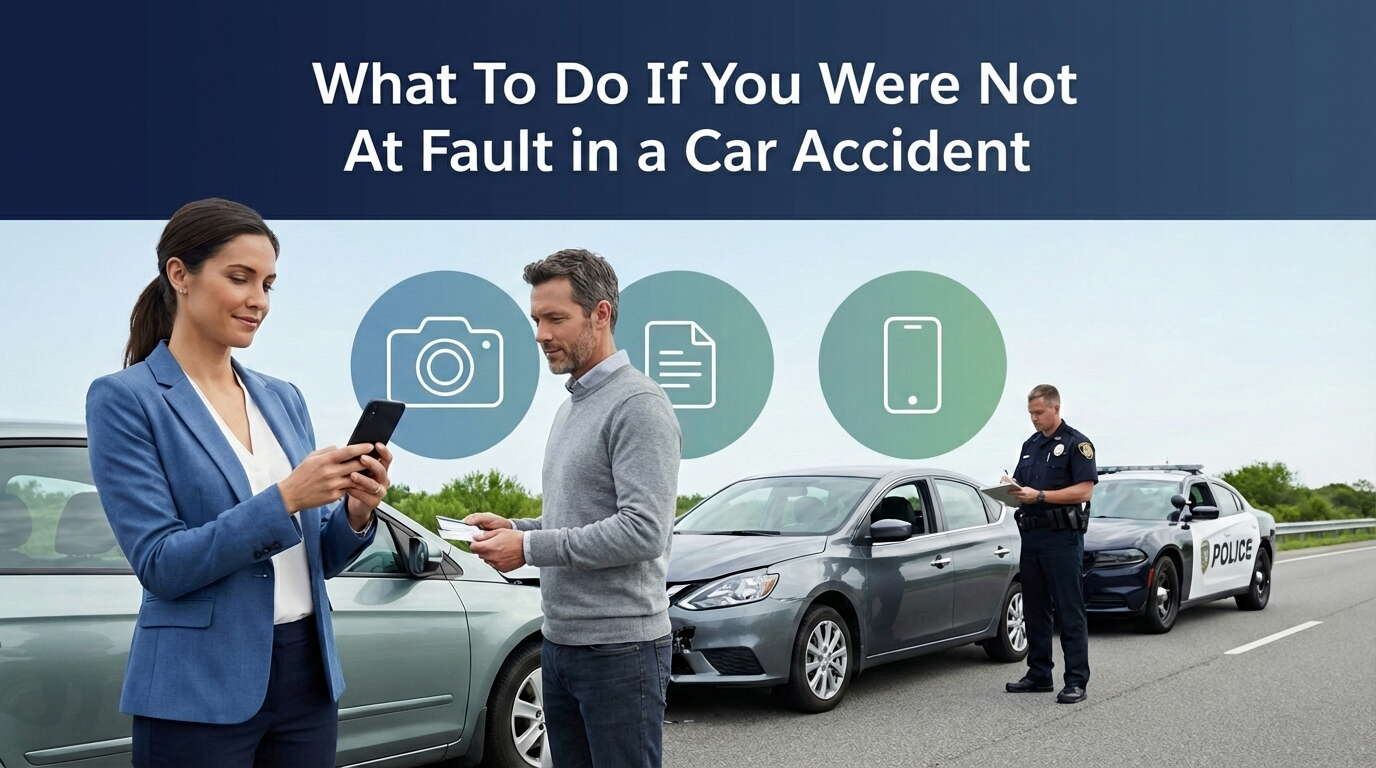
The moments immediately following a car accident are critical. What you do—or don’t do—at the scene can directly influence the outcome of your insurance claim. Prioritizing safety, gathering information, and documenting everything meticulously are paramount when you are not at fault.
Prioritize Safety and Assess Injuries
Your immediate safety is paramount. Move your vehicle to the side of the road if safe, turn on hazard lights, and assess yourself and passengers for injuries. If anyone has sustained significant injuries, call 911 immediately. Do not move anyone who appears seriously injured unless there is immediate danger. Even seemingly minor injuries can worsen later, so prompt medical evaluation is crucial.
Contact Law Enforcement: Establishing an Official Record
Even if the accident appears minor, call the police. A police officer can assess the situation, determine preliminary fault, and create an official police report. This report is invaluable for insurance claims, containing essential information and the officer’s observations regarding the cause of the accident. The presence of law enforcement ensures information is exchanged formally.
Do NOT Admit Fault or Apologize
CRITICAL: Do not admit fault or apologize to the other driver. Even an innocent statement like “I’m so sorry” can be interpreted by the insurance company as an admission of guilt, which can severely jeopardize your claim. Remain calm, be factual, and avoid any statements that could imply responsibility. Let the police and insurance companies determine fault based on evidence.
Exchange Information Meticulously
Gather accurate information from the other driver: full name and contact information, driver’s license number, vehicle make/model/year and license plate, insurance company name and policy number. If the other driver is hesitant to share, note their license plate and call the police. Be prepared to provide your own information as well.
Document the Scene: The Strategic Power of Evidence
Use your smartphone to thoroughly document: all damage to both vehicles from multiple angles, wide-angle shots of the accident location including road conditions and traffic signals, skid marks and debris, and the likely points of impact. This visual evidence helps reconstruct the accident and clearly demonstrate how it occurred.
Seek Witness Statements: Unbiased Accounts to Strengthen Your Case
If there are bystanders who witnessed the accident, approach them politely and ask for their contact information. Witness statements can offer an unbiased perspective on how the collision happened, which can be invaluable if there is a dispute about fault. Their independent account can corroborate your version of events and strengthen your claim significantly.
Prioritizing Your Health: The Unseen Battle Against Injuries
While managing the immediate aftermath is crucial for your claim, your health and well-being are paramount. Injuries sustained in an accident, even those that seem minor at first, can have long-term consequences if not properly addressed.
Seek Immediate Medical Attention, Even if You Feel Fine
Many significant injuries, such as whiplash, concussions, or internal damage, do not manifest immediately. Symptoms can appear days or even weeks after the accident. Therefore, it is imperative to seek medical attention from a doctor or visit an emergency room shortly after the collision, regardless of how you feel. This initial medical evaluation serves two critical purposes: it prioritizes your health and creates an official record linking your injuries directly to the accident.
Follow Through with All Medical Recommendations
Once you have seen a medical professional, follow all recommended treatment plans diligently. This includes attending all follow-up appointments, physical therapy sessions, and taking prescribed medications. Consistent adherence to medical advice builds a strong case by showing a clear progression of treatment and genuine effort towards recovery. Any deviation can be used by the at-fault party’s insurer to argue that your injuries aren’t as severe as claimed.
Document Your Medical Journey
Throughout your recovery, meticulously document every aspect of your medical treatment:
- Medical Records: Obtain copies of all doctor’s notes, diagnostic test results, and treatment plans
- Medical Bills: Keep all bills from doctors, hospitals, therapists, and pharmacies
- Receipts for Expenses: Save receipts for co-pays, prescription costs, or medical equipment
These documents are essential for quantifying your medical damages and provide concrete proof of the extent of your injuries and financial costs.
Navigating the Insurance Maze: Protecting Your Interests
Dealing with insurance companies after a car accident can be complex and intimidating. As the non-at-fault driver, you have specific rights and should approach interactions with insurers strategically.
Notifying Your Own Insurance Company
While the at-fault driver’s insurance company will ultimately be responsible for your damages, notify your own insurance company about the accident as soon as possible. Your policy may contain “first-party benefits” such as Personal Injury Protection (PIP) or Medical Payments (MedPay) coverage, which can help pay for your medical expenses and lost wages regardless of fault. This can provide immediate financial relief while your claim with the other insurer is being processed.
Dealing with the At-Fault Driver’s Insurance Company
The insurance company of the driver who caused the accident will likely contact you soon. While they may appear helpful, remember their primary goal is to minimize payouts. They may:
- Request a recorded statement—be extremely cautious with this
- Offer a quick settlement—often significantly lower than what your claim is worth
- Downplay your injuries—focusing on minor aspects to reduce liability
It is often best to delay giving a formal statement or accepting any settlement until you have a clear understanding of your injuries and damages, and have consulted with an attorney.
Understanding Uninsured and Underinsured Motorist Coverage
One in three drivers (33.4%) were either uninsured or underinsured in 2023—a 10 percentage point increase since 2017. This statistic highlights the significant risk of encountering drivers without adequate insurance. Uninsured Motorist (UM) and Underinsured Motorist (UIM) coverage on your own insurance policy protects you in such scenarios. If the at-fault driver has no insurance or insufficient insurance to cover your damages, your UM/UIM coverage can step in to compensate you up to your policy limits.
Building Your Case: Compiling Comprehensive Evidence
To successfully navigate the insurance claims process and secure fair compensation, you must build a compelling case. This involves compiling comprehensive evidence that clearly demonstrates the other driver’s fault and quantifies the full extent of your damages.
Essential evidence includes:
- The Police Crash Report: An official, objective account of the accident containing the officer’s assessment of fault
- Photographs and Video Footage: Visual proof of vehicle damage, skid marks, and conditions providing undeniable evidence
- Witness Statements: Independent verification of the accident narrative from credible, unbiased witnesses
- Medical Records and Bills: Documentation quantifying your injuries, treatments, recovery duration, and costs
- Lost Wages Documentation: Pay stubs, employer statements, or tax returns proving income losses
- Modern Evidence: Dash camera footage, GPS data, and vehicle event data recorders providing objective information
Understanding Damages and Your Potential Recovery
When you are not at fault for a car accident, you have the right to seek compensation for all losses you have incurred. Understanding the different types of damages and how they are calculated is essential for ensuring you receive a fair settlement.
Economic Damages: Tangible Financial Losses
Economic damages represent quantifiable financial losses:
- Medical expenses (past and future)
- Lost wages and loss of earning capacity
- Property damage to your vehicle
- Other out-of-pocket expenses
The average settlement for car accident cases is about $37,248.62, and economic damages form a significant portion of this.
Non-Economic Damages: Pain, Suffering, and Emotional Distress
Non-economic damages compensate for intangible losses:
- Physical pain and suffering
- Emotional distress, anxiety, depression, or PTSD
- Loss of enjoyment of life
- Disfigurement or scarring
Property Damage: Repair, Replacement, and Diminished Value
Property damage includes the cost of repairs or, if your vehicle is a total loss, its fair market value. Beyond immediate repair or replacement, you may also be entitled to a claim for “diminished value”—the difference between your vehicle’s market value before the accident and after repairs. Vehicles with an accident history often see a 10-25% reduction in their resale or trade-in value compared to accident-free counterparts.
When to Consult a Car Accident Attorney
While you may be able to handle an insurance claim on your own, there are many situations where consulting an Louisiana car accident attorney is not just beneficial, but essential. Car accidents are the leading cause of personal injury claims in 2025, making up over 50% of cases in the U.S., highlighting the frequency and complexity involved.
The Value of Legal Representation in Complex Claims
An attorney is invaluable if:
- Injuries are severe or involve permanent disability
- Fault is disputed
- The at-fault driver was uninsured or underinsured
- The insurance company is acting in bad faith or making lowball offers
- There are multiple parties involved
- You are unfamiliar with Louisiana’s specific traffic laws and insurance regulations
An attorney will handle communication with insurance companies, gather evidence, negotiate settlements, and, if necessary, represent you in court. They work on a contingency fee basis, meaning they only get paid if you win your case.
Frequently Asked Questions
With 33.4% of drivers being uninsured or underinsured, this is a common problem. Your Uninsured Motorist (UM) coverage on your own policy protects you in this scenario. You can file a claim with your insurance company under your UM coverage, which will compensate you up to your policy limits.
No. Insurance companies typically make lowball initial offers hoping you’ll accept quickly. These offers rarely cover the full extent of your damages. Consult with an attorney before accepting any settlement to ensure it adequately compensates you for all medical expenses, lost wages, pain and suffering, and future damages.
Under Louisiana’s current pure comparative fault system, you can still recover damages even if you’re partially at fault—your compensation is just reduced by your percentage of fault. However, starting January 1, 2026, the new 51% bar rule means you cannot recover if you’re 51% or more at fault. This makes it critical to have an attorney counter any attempts to unfairly assign blame to you.
For accidents occurring on or after July 1, 2024, you have two years from the date of the accident to file a lawsuit. For accidents before that date, the deadline is one year. Missing this statute of limitations deadline means you forfeit your right to compensation.
Conclusion: Taking Control of Your Recovery
Being involved in a car accident when you are not at fault places you in a position to seek full compensation for your losses. However, this outcome is not automatic. It requires a strategic and proactive approach, starting from the moment the collision occurs.
Prioritizing safety, meticulously documenting the scene, seeking prompt medical attention, and understanding the intricacies of insurance claims are paramount. Remember never to admit fault, and be cautious when interacting with insurance companies. By compiling thorough evidence, understanding the types of damages you are owed, and knowing when to seek professional legal guidance from an experienced personal injury attorney in New Orleans, you can navigate this challenging period effectively and achieve a successful recovery.
Your commitment to these essential steps will pave the way for rightful compensation and peace of mind. Don’t let insurance companies minimize your claim or take advantage of you during this vulnerable time. Protect your rights and secure the compensation you deserve.
Not At Fault? Call Sean Regan to Protect Your Rights
(504) 888-7777Free Consultation • No Fees Unless We Win • Maximum Compensation