
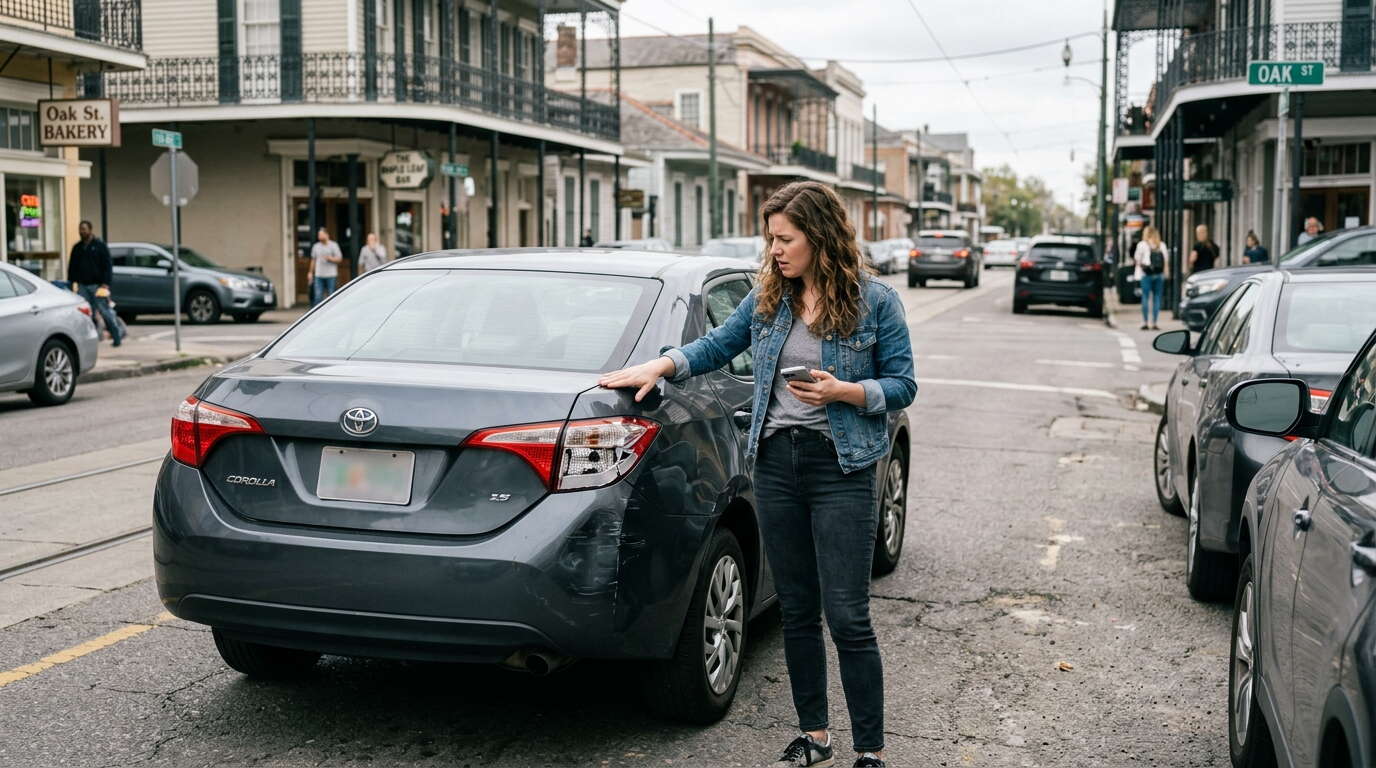
Car Accident With No Injury: Do You Actually Need a Lawyer?
You’re making a left turn on a green arrow. A car from the opposite direction blows through a red light and T-bones you. Your airbags deploy. Glass goes everywhere. But somehow, you walk away without a scratch. Your car, though, isn’t so lucky. Frame damage. Likely totaled. After a car accident where nobody was injured, one of the first questions people ask is whether they need a lawyer. The answer isn’t always the same. It depends on your specific situation, the damage involved, and how the insurance company handles your claim. This guide will help you figure out which side of that line you fall on. No sales pitch. Just the information you need to make the right call.
In This Guide
- 1.The Short Answer: It Depends
- 2.When You Do NOT Need a Lawyer
- 3.7 Situations Where You DO Need a Lawyer
- 4.What a Lawyer Actually Does for You
- 5.Steps to Take Right After the Accident
- 6.What Is Actual Cash Value?
- 7.No Police Report? How to Prove Fault
- 8.Can You Sue With No Injuries?
- 9.How Much Does a Lawyer Cost?
- 10.Frequently Asked Questions
The Short Answer: It Depends on Your Situation
You probably don’t need a lawyer after a car accident with no injuries if fault is clear, the damage is minor, and the insurance company pays your claim fairly and quickly. But if any of those three things break down, legal help can save you thousands of dollars.
That sounds simple. In practice, it gets complicated fast.
Insurance adjusters don’t work for you. They work for the insurance company, and their job is to close your claim for as little money as possible. When the damage is small and the facts are straightforward, the process usually goes smoothly. When the other driver disputes what happened, or the insurer lowballs your payout, or your car is totaled and the offer barely covers half its value, that’s where things fall apart.
So before you decide one way or the other, keep reading. The next two sections will tell you exactly when a lawyer is unnecessary and when one could make a real difference.
When You Do NOT Need a Lawyer After a No-Injury Car Accident
Most law firm websites skip this part. They want every reader to pick up the phone. But honesty matters more than a sales funnel, and the truth is that plenty of no-injury accidents don’t need a lawyer involved.
You can likely handle your claim yourself if all five of these things are true:
Quick Self-Check: You Probably Don’t Need a Lawyer If…
- ✓ Fault is clear, and you have a police report or solid evidence confirming it
- ✓ Property damage is minor, roughly under $5,000
- ✓ The other driver’s insurance accepts the claim and offers fair value
- ✓ No delayed injuries surface after you’ve been checked by a doctor
- ✓ The math works in your favor, meaning a lawyer’s contingency fee won’t eat most of your settlement
If you can check all five boxes, you’re probably fine handling this on your own. File your claim, negotiate if the first offer feels low, and move on.
And there’s a practical math issue worth mentioning. Most personal injury attorneys work on contingency, taking 33–40% of whatever you recover. If your total claim is worth $4,000, a lawyer’s cut could be $1,200 to $1,600. After court costs, you might end up with less than if you’d handled it yourself. Many attorneys will be upfront about this. Some will turn down the case entirely because the numbers don’t justify their involvement.
That said, if even one of those five boxes doesn’t check out, keep reading.
7 Situations Where You DO Need a Lawyer After a No-Injury Car Accident
The Insurance Company Lowballs or Denies Your Claim
Insurance companies make money by paying out less than they take in. Adjusters are trained to minimize your settlement. They may undervalue your car, dispute the cost of repairs, or pressure you to accept a quick, low offer before you’ve had time to assess the full damage.
If the insurer’s offer doesn’t cover your actual losses, a car accident lawyer can push back with evidence, proper valuations, and the legal weight to force a fair number. For a deeper look at these tactics, read about handling insurance companies during a car accident.
The Other Driver Disputes Fault
This is where things get stressful fast. The other driver told you at the scene that it was their fault. Maybe they even apologized. But a week later, they tell their insurance company a completely different story.
Now it’s your word against theirs.
Louisiana uses a comparative fault system, which means the court assigns a percentage of blame to each driver. Every percentage point of fault assigned to you reduces your payout. If the other side claims you were 30% responsible, your compensation drops by 30%. A lawyer can investigate the facts, gather evidence, and protect you from an unfair fault determination. Sean Regan covers this in detail in his post on Louisiana car accidents and fault.
The Other Driver Is Uninsured or Underinsured
Over 12% of drivers on U.S. roads carry no insurance at all, according to NHTSA. If the at-fault driver has no coverage, or their policy limits don’t cover your damages, you may need to file a claim under your own uninsured/underinsured motorist coverage. An attorney can also pursue the driver directly through a civil lawsuit.
Your Vehicle Is Totaled or Has High Repair Costs
When the cost to fix your car exceeds a certain percentage of its market value, the insurance company declares it a total loss. Their offer will be based on actual cash value, which is frequently lower than what you’d expect. We’ll break down why in a section below.
If your car was newer, well-maintained, or recently upgraded, the gap between what you think it’s worth and what the insurer offers can be significant. A lawyer can challenge the valuation with independent appraisals and comparable vehicle sales data.
For cars that are repaired rather than totaled, you may also have a diminished value claim. Your car is worth less after a major accident, even after repairs. Insurance companies rarely volunteer this money.
You Were in a Hit and Run
The other driver fled the scene. You have no insurance information, maybe no plate number. In a hit-and-run accident, your own UM coverage usually becomes the primary source of compensation. But getting your own insurer to pay fairly when there’s no at-fault driver to pursue can be a fight in itself.
A lawyer can track down surveillance footage, pull intersection camera records, and build the kind of case that makes your insurer take the claim seriously.
Hidden Injuries Show Up Days or Weeks Later
You felt fine at the scene. Adrenaline does that. But two days later, your neck is stiff. Your head hurts. You can’t sleep.
Whiplash, concussions, and soft tissue injuries commonly surface 48 hours to a week after impact. What started as a no-injury car accident just became an injury case.
If you notice any symptoms after the accident, see a doctor immediately. Medical records are the single most important piece of evidence in any injury claim. Without them, the insurance company will argue your pain came from something else entirely.
You’re Being Asked to Give a Recorded Statement
The other driver’s insurance company calls. They’re friendly. They just want to “get your side of the story.” They ask if they can record it.
Be careful. Recorded statements are used to find inconsistencies in your account, pin partial fault on you, and limit your payout. You are not legally required to give one to the other driver’s insurer. Before you agree, talk to a lawyer. A five-minute phone call could save you thousands.
If any of these seven situations apply to you, a free consultation is worth your time.
No cost, no obligation. Just answers. Schedule a free consultation
What a Non-Injury Car Accident Lawyer Actually Does for You
A personal injury attorney handling a property damage claim does four things:
Gathers Evidence
Crash reports, photos, repair estimates, surveillance footage, witness statements, and vehicle data from newer cars that log telematics. The stronger your evidence file, the harder it is for the insurance company to lowball you.
Calculates Full Claim Value
Most people only think about repair costs. But your claim may also include rental car expenses, towing fees, lost wages, diminished vehicle value, and in some cases, emotional distress. A lawyer makes sure nothing gets left out.
Negotiates With Insurers
Adjusters negotiate claims every day. You do it once, maybe twice in your life. That experience gap matters. A lawyer levels the field.
Files a Lawsuit If Needed
Most claims settle without court. But if the insurance company won’t offer a fair number, the threat of litigation, and the willingness to follow through, changes the conversation.
Most car accident lawyers work on a contingency fee basis. You pay nothing upfront. The attorney takes a percentage of your settlement, typically 33% before a lawsuit is filed and up to 40% if it goes to trial. If they don’t win, you don’t owe them a fee.
Steps to Take Right After a No-Injury Car Accident
What you do in the first 72 hours matters more than most people realize. Here is what to do after a car accident in Louisiana.
Call the Police and Request a Report
Even for minor accidents, a police report creates an official record of what happened. In Louisiana, you’re legally required to report any accident with property damage over $500, and almost any dented bumper today will clear that threshold.
But some police departments, especially in busy metro areas, won’t send officers to non-injury accident scenes. If they refuse, write down the name and badge number of whoever you spoke with. Ask if you can file a supplemental report at the station later. Not all jurisdictions allow this, but many do.
Document Everything at the Scene
Take photos of all vehicles from multiple angles. Capture skid marks, traffic signals, license plates, and road conditions. Shoot a short video walkthrough if you can. The more you document now, the less you’ll have to rely on memory later.
Get Witness Contact Info
If anyone saw the accident, get their name and phone number. Even a bystander who saw which light was green can make the difference between a clear-cut claim and a disputed one.
Exchange Insurance Info. Don’t Discuss Fault.
Swap names, phone numbers, insurance companies, and policy numbers. Do not apologize, do not speculate about what happened, and do not tell the other driver that the accident was your fault. Anything you say can be used against you later.
See a Doctor Within 72 Hours
Even if you feel completely fine. Whiplash, concussions, and internal soft tissue injuries can take days to surface. A medical exam creates a documented baseline, which protects you if symptoms show up later.
Notify Your Insurance Company
Stick to the basic facts: when, where, and what happened. Do not speculate about fault. Do not volunteer details that weren’t asked for. If you’re unsure what to say, it’s okay to tell the adjuster you’ll follow up after reviewing your options.
Get 2-3 Independent Repair Estimates
Don’t automatically accept the insurer’s preferred body shop or their first damage assessment. Independent estimates give you leverage if their number comes in low.
Don’t Sign Anything or Give a Recorded Statement Yet
You are not required to accept the first settlement offer. You are not required to give a recorded statement to the other driver’s insurance company. Take your time. Understand your rights first.
What If the Other Driver Admitted Fault at the Scene but Later Changes Their Story?
This happens more than you’d think. At the scene, people are shaken up. They apologize. They say they didn’t see the light. But once they talk to their insurance company, the story shifts.
Your protection against this is documentation. Photos, witness contact info, and a written account of what the other driver said, created the same day, are your safety net. Without these, it becomes a he-said, she-said situation that the insurance company can use against you.
What Is Actual Cash Value, and Why Your Payout Might Feel Low
If your car is totaled, the insurance company will offer you “actual cash value,” often shortened to ACV. This is the fair market value of your car immediately before the accident. Not what you paid for it. Not what a new replacement costs. What a buyer would have reasonably paid for your specific car, with its mileage, condition, and wear, on the day before the crash.
For newer vehicles, ACV is usually close to what you’d expect. For older cars, the gap can be painful. A 2007 Camry in good shape might be worth $6,000 to $8,000 on the market, even though replacing it with a comparable used car could cost you $10,000 or more.
Insurance companies calculate ACV using comparable vehicle sales in your area, sometimes pulling from databases that undervalue cars in certain regions. If their offer feels low, you have options:
- Pull your own comparable sales from Autotrader, CarGurus, or Kelley Blue Book
- Document recent maintenance, new tires, or upgrades that added value
- Request the insurer’s full valuation report so you can see exactly how they reached their number
- Ask about your state’s appraisal clause, which lets an independent appraiser review the dispute
- File a complaint with the Louisiana Department of Insurance if the adjuster refuses to negotiate in good faith
For cars that are repaired rather than totaled, ask about a diminished value claim. Your car’s resale value drops after a major accident even if it’s been fully repaired, and you may be owed compensation for that difference.
What If There’s No Police Report? How to Prove Fault Without One
This is one of the most common concerns people have after a non-injury accident, and almost no one talks about it.
Police departments in some cities won’t respond to accidents that involve only property damage. They tell you to exchange info and file with your insurance. No report, no documentation, no officer on record saying who was at fault.
That’s frustrating. But a police report is helpful evidence, not required evidence. You can still build a strong case without one.
Start with your own documentation. Photos, videos, and a written account of what happened, created the same day, carry real weight. Witness statements from bystanders or nearby business owners matter too.
Dashcam footage is powerful if you have it. And if the other driver has a newer vehicle—Teslas, for example, record video from multiple cameras—that footage exists even if they don’t want to share it.
Which raises a fair question: why would the at-fault driver share footage that proves they’re at fault?
Adverse Inference: When Hiding Evidence Backfires
They probably won’t volunteer it. But if the claim goes to court, a judge can order them to produce it. And if they refuse, the court can apply what’s called “adverse inference.” That means the judge can tell the jury it’s reasonable to assume the footage would have been unfavorable to the person who hid it.
Withholding evidence tends to backfire.
Intersection cameras, nearby business surveillance systems, and even evidence from speeding and vehicle data can fill the gap when no police report exists. A lawyer knows where to look and how to request this evidence before it’s recorded over or deleted.
Can You Sue After a Car Accident With No Injuries?
Yes. You don’t need physical injuries to file a lawsuit.
You can sue for property damage, diminished vehicle value, rental car costs, towing fees, lost wages from missed work, and in some cases, emotional distress. The question isn’t whether you can sue. It’s whether it makes financial sense for your situation.
For smaller claims, small claims court is often the best route. Most states set the limit between $5,000 and $10,000. You don’t need a lawyer to file there, and the process is simpler than a full civil lawsuit. For a breakdown of when insurance claims make more sense than lawsuits, read about car accident claims.
CRITICAL DEADLINE: Louisiana has a one-year prescriptive period. That means you have just one year from the date of the accident to file a lawsuit. Miss it, and you lose your legal right to sue. This is one of the shortest deadlines in the country. Most other states give you two or three years. Don’t assume you have more time than you do.
How Much Does a Lawyer Cost When There Are No Injuries?
Most car accident attorneys work on contingency. You pay nothing upfront and nothing out of pocket. The lawyer takes a percentage of your settlement or court award only if they win.
Typical fee before a lawsuit is filed
Rate increases if the case is litigated
No cost to find out if you have a case
Many lawyers will be honest with you if your claim is too small to justify their involvement. A good attorney won’t take a case where their fee would leave you worse off than handling it yourself. Taking on a $3,000 property damage claim on contingency doesn’t make sense for either side.
A free consultation costs you nothing. If the lawyer tells you to handle it yourself, you’ve lost nothing and gained free legal advice. If they tell you the case has value, you’ll know why. Most firms, including Sean Regan Law, don’t charge for this initial conversation.
Frequently Asked Questions
Usually not. If the damage is minor, fault is clear, and the other driver’s insurance cooperates, you can handle the claim yourself. Get a couple of repair estimates, file the claim, and negotiate if the offer seems low.
It depends on the value of your property damage claim. If your car is totaled or the damage is substantial, yes. If it’s a scratched bumper worth $800, most attorneys will advise you to file the claim yourself.
Absolutely. Many people do. Document the damage, file with the at-fault driver’s insurance, and provide repair estimates. The process gets harder if fault is disputed, the insurer lowballs you, or the other driver is uninsured.
You have several options. Negotiate with the adjuster using your own repair estimates and comparable vehicle sales. File a complaint with your state’s department of insurance. Take them to small claims court. Or hire a lawyer who can apply pressure through formal legal channels.
Insurance claims should be filed as soon as possible, ideally within days. For lawsuits, the deadline depends on your state. In Louisiana, you have one year. Most other states allow two to three years. Check your state’s statute of limitations and don’t wait until the last minute.
Yes. Always. Injuries like whiplash, concussions, and soft tissue damage don’t always show up right away. A medical exam within 72 hours creates a documented record that protects you if symptoms develop later.
Document everything yourself: photos, video, witness info, and a written account of what happened. Ask the police department if you can file a supplemental report at the station. Keep records of the officers you spoke with at the scene.
Not voluntarily in most cases. The other driver has no obligation to share footage that may hurt their case. But if the claim goes to court, a judge can order them to produce it. Refusing to hand over evidence that exists can result in adverse inference, meaning the court assumes the footage would have been bad for them.
The Bottom Line
Not every car accident without injuries needs a lawyer. If the damage is small, fault is obvious, and the insurance company plays fair, you can handle it. Save yourself the contingency fee and move on.
But if the insurer is lowballing you, the other driver is changing their story, your car is totaled, or you’ve started feeling pain days after the crash, don’t try to fight that alone. The system is built to pay you as little as possible, and an experienced attorney can change the outcome.
Not Sure If You Need a Lawyer? Find Out for Free.
Sean Regan offers free consultations to anyone who’s been in a car accident in Louisiana. No obligation, no pressure. Just answers.
(504) 888-7777Schedule a Consultation Online • No Fees Unless We Win
About the Author: Sean Regan is a New Orleans-based personal injury attorney and the founder of Sean Regan Law. A graduate of LSU and Loyola Law School, he has recovered over $35 million in settlements for his clients. Sean is bilingual in English and Spanish and is available 24/7 at (504) 888-7777. Read what his clients say on the testimonials page.