Single Vehicle Accidents in Louisiana: Legal Rights and Insurance Options You Need to Know
What This Guide Covers: When your car is the only vehicle involved in a crash, the assumption is that you were entirely at fault. Insurance companies count on that assumption. But single vehicle accidents are often caused by factors beyond the driver’s control: dangerous road conditions maintained by a government agency, defective vehicle parts, or another driver who ran you off the road and kept going. Louisiana law allows you to pursue compensation from any party whose negligence contributed to your crash, even when no other vehicle was involved. This guide explains who can be held liable, which insurance coverages apply, how the new 51% fault rule changes your options, and the steps you need to take to protect your claim.
What Qualifies as a Single Vehicle Accident?
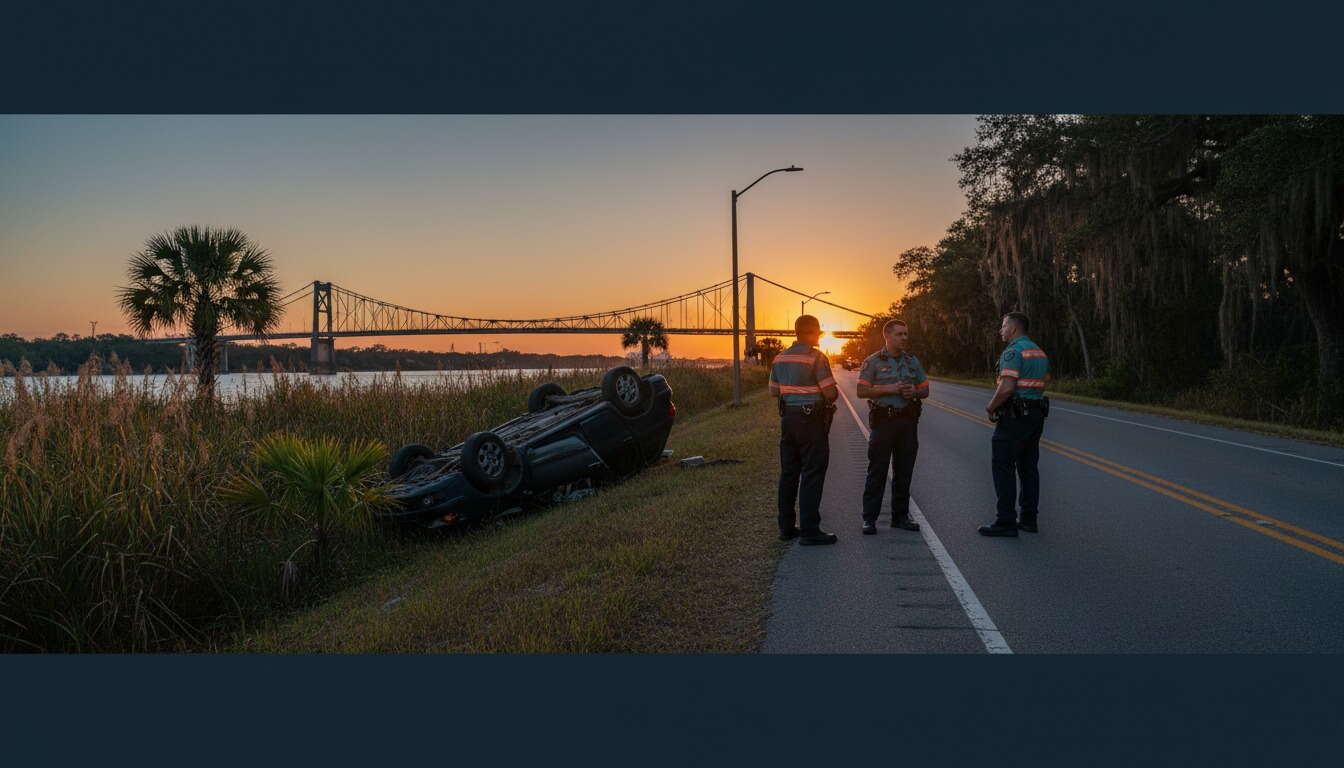
A single vehicle accident is any crash involving only one car, truck, motorcycle, or other motor vehicle with no collision with another driver. According to the Insurance Institute for Highway Safety (IIHS), single-vehicle crashes accounted for 52% of all motor vehicle crash deaths nationwide in 2023. These are not minor incidents. Common examples include running off the road and striking a tree, pole, or ditch, rollovers caused by sharp turns or overcorrection, hitting a pothole, debris, or an animal on the roadway, hydroplaning or losing control in severe weather, striking a guardrail, median barrier, or highway infrastructure, and crashes caused by mechanical failure such as brake or tire defects.
While these may seem straightforward, the question of fault in single vehicle accidents is often far more complex than it appears. Multiple parties, including government agencies, vehicle manufacturers, and other drivers, could share responsibility for what happened.
Who Is at Fault in Single Vehicle Accidents Under Louisiana Law?
Many people assume that the driver is automatically at fault in a single-vehicle crash. While that can be the case, Louisiana’s modified comparative fault system under La. C.C. Art. 2323 means that liability can be distributed among multiple parties. Understanding how fault is determined in Louisiana car accidents is critical to protecting your claim.
Hazardous Road Conditions and Government Liability
Louisiana’s roads, particularly in the Greater New Orleans area, are notorious for potholes, uneven pavement, and poor drainage. When a government entity such as the Louisiana Department of Transportation and Development (DOTD) or a local parish fails to maintain roadways, they can be held liable under Louisiana’s duty-risk analysis. If a massive pothole caused your tire to blow out, or missing signage left you unaware of a dangerous curve, the responsible government body may owe you compensation. Claims against government entities often have additional notice requirements and shorter deadlines, making prompt legal consultation essential.
Defective Vehicles or Auto Parts
If your crash was caused by a mechanical failure, such as defective brakes, a faulty tire, steering malfunction, or a recalled component, the vehicle manufacturer or parts supplier may bear responsibility. Under the Louisiana Products Liability Act (La. R.S. 9:2800.54), manufacturers can be held strictly liable for injuries caused by unreasonably dangerous products, including motor vehicles and their components.
Another Driver’s Negligent Actions (Phantom Drivers)
Sometimes a single vehicle accident is actually caused by another driver who ran you off the road, cut you off, or forced you to swerve. Even if the other vehicle never made contact with yours and left the scene, you may still have a claim. These “phantom driver” or “miss-and-run” scenarios are recognized under Louisiana law, though they require additional evidence such as witness statements, dashcam footage, or physical proof of the evasive maneuver. Your uninsured motorist (UM) coverage may apply in these situations.
Negligent Maintenance or Repair
If a mechanic or repair shop performed faulty work on your vehicle, such as improper brake repair, incorrect tire installation, or a failed safety inspection, and that negligent work contributed to your crash, the repair provider may be liable. This is a negligence-based claim separate from the product liability framework.
How the 51% Fault Rule Affects Single Vehicle Accident Claims
⚠ Why This Law Change Matters for Single Vehicle Crashes
As of January 1, 2026, Louisiana replaced its pure comparative fault system with a modified comparative fault rule under HB 431. If you are assigned 51% or more of the fault for your accident, you are completely barred from recovering any compensation from other responsible parties.
This is especially significant for single vehicle accidents because insurance companies will aggressively argue that the driver was primarily responsible. Their goal is to push your fault percentage above the 51% threshold so they owe you nothing.
Example: You hit a pothole that the DOTD failed to repair, causing a blowout and rollover. The insurer argues you were speeding and assigns you 55% fault. Under the old system, you would still recover 45% of your damages. Under the new rule, you recover nothing. An experienced car accident lawyer can challenge inflated fault assessments and fight to keep your percentage below the 51% bar.
Insurance Coverage Options After a Single Vehicle Crash
Your insurance coverage plays a critical role in determining how much financial recovery is available after a single vehicle accident. Louisiana requires all drivers to carry minimum liability insurance, but liability coverage only pays for damages you cause to others. In a single-vehicle accident, you will typically need to rely on other parts of your policy.
Collision Coverage
Pays for damage to your vehicle regardless of who was at fault. Not required by Louisiana law, but if you have it, your insurer should cover vehicle repairs or replacement minus your deductible. If another party is later found liable, your insurer may subrogate and seek reimbursement from them.
UM/UIM Coverage
If your crash was caused by an unidentified hit-and-run or phantom driver, your uninsured/underinsured motorist policy may provide compensation. Under La. R.S. 22:1295, Louisiana provides strong protections for UM/UIM policyholders. Learn more about how UM coverage works.
MedPay
Covers medical expenses for you and your passengers regardless of fault. If you sustained injuries such as broken bones, whiplash, or soft tissue damage, MedPay can help cover emergency visits, surgeries, and physical therapy while a larger claim is being resolved.
Warning: Insurance companies often try to minimize payouts on single-vehicle claims by placing 100% of the blame on the driver. Do not give a recorded statement to your insurer without first consulting an attorney. The tactics insurers use in these situations are the same ones they deploy in any car accident insurance negotiation.
Filing Deadlines for Single Vehicle Accident Claims
| Claim Type | Deadline |
|---|---|
| Personal injury (post-July 2024) | 2 years from date of accident |
| Personal injury (pre-July 2024) | 1 year from date of accident |
| Product liability (LPLA) | 1 year from date of injury (La. R.S. 9:2800.54) |
| Claims against government entities | Additional notice requirements may apply with shorter deadlines |
Missing any of these deadlines permanently bars your claim. Claims against government entities like DOTD are particularly time-sensitive because Louisiana law imposes additional administrative notice requirements before you can file suit. Consulting an attorney early in the process ensures no deadline passes unnoticed. For a detailed breakdown of how these cases progress, see our guide on the car accident lawsuit timeline.
What to Do After a Single Vehicle Accident
The steps you take immediately after your crash can significantly impact your ability to recover compensation later.
Call 911 and File a Police Report
Even if the accident seems minor, an official report creates a critical record of the incident, road conditions, and contributing factors. The officer may document potholes, missing signs, or debris that supports a third-party liability claim.
Seek Immediate Medical Attention
Some injuries, including concussions, internal bleeding, and spinal injuries, may not show symptoms right away. Prompt medical documentation both protects your health and strengthens any future claim by linking your injuries to the crash.
Document the Scene Thoroughly
Photograph the vehicle damage, road conditions (potholes, debris, missing signs, standing water), skid marks, weather conditions, and your injuries. This evidence can be crucial in proving third-party liability. Video walkthrough footage is especially valuable.
Do Not Admit Fault
When speaking with police or your insurer, describe what happened factually without accepting blame. Under the new 51% fault rule, every percentage point of fault assigned to you matters. Liability determinations should be made after a full investigation, not at the scene. Learn more about protecting your rights when fault is disputed.
Compensation You May Recover After a Single Vehicle Accident
If a third party is liable for your single vehicle accident, Louisiana law entitles you to pursue compensation for medical expenses (past, present, and future), lost wages and diminished earning capacity, vehicle repair or replacement costs, pain and suffering, mental anguish, and loss of enjoyment of life, and rehabilitation and long-term care expenses. There is no statutory cap on most personal injury damages in Louisiana, and juries have broad discretion in valuing non-economic losses.
Frequently Asked Questions About Single Vehicle Accidents
Yes. If a third party, such as a government entity responsible for road maintenance, a vehicle manufacturer, an auto mechanic, or another driver, contributed to your crash, you may file a personal injury lawsuit. Louisiana’s comparative fault system allows recovery as long as your share of fault is below 51%.
It depends on the circumstances and your insurer’s policies. If you are determined to be at fault, a rate increase is possible. However, if evidence shows that a road defect, vehicle malfunction, or another driver caused the accident, a rate increase may be avoidable. Consulting with an attorney before speaking extensively with your insurer can help protect you.
For accidents on or after July 1, 2024, the prescriptive period is two years from the date of injury. For accidents before that date, the deadline was one year. Claims against government entities may have additional notice requirements with shorter deadlines, so consult an attorney as soon as possible.
These are called “phantom driver” or “miss-and-run” scenarios, and Louisiana law recognizes them. You may file a claim under your own uninsured motorist (UM) policy. The key is evidence: witness statements, dashcam footage, physical marks showing an evasive maneuver, and a prompt police report all strengthen your case.
Yes, but only if your fault is 50% or less under the modified comparative fault rule that took effect January 1, 2026. If you are assigned 51% or more of the blame, you are barred from recovery entirely. If your fault is below 51%, your damages are reduced proportionally by your percentage of responsibility.
Do Not Let Assumptions Cost You Compensation
The biggest mistake you can make after a single vehicle accident is assuming you have no case because no other car was involved. Government agencies, vehicle manufacturers, mechanics, and phantom drivers can all share liability for your crash. An experienced attorney can investigate every contributing factor and hold every responsible party accountable.
Sean Regan is a New Orleans native, LSU and Loyola Law School graduate, and experienced personal injury attorney who has recovered over $35 million in settlements for clients throughout Louisiana. He works with accident reconstruction experts, gathers police and maintenance records, examines vehicle defect histories, and pursues every available source of recovery. Read what his clients say on the testimonials page.
Injured in a Single Vehicle Accident? You May Have Legal Options.
Free consultation. No obligation. We investigate every contributing factor.
(504) 888-7777Schedule a Consultation Online • No Fees Unless We Win • Se Habla Español
About the Author: Sean Regan is a New Orleans-based personal injury attorney and the founder of Sean Regan Law. A graduate of LSU and Loyola Law School, Sean has recovered over $35 million in settlements for his clients. He is bilingual in English and Spanish and is available 24/7 at (504) 888-7777.