

Common Car Accidents Injuries and the Legal Rights Every Louisiana Victim Should Know
What This Guide Covers: This guide focuses on Louisiana law and the New Orleans area, including Orleans Parish and Jefferson Parish. One important thing to understand about car accidents injuries is that many of them stay hidden at first. People often feel fine at the scene, then notice pain in the days that follow, a delayed pattern that medical and safety sources have long described. This guide explains why symptoms are so often delayed, walks through the injury categories that come up most often in the claims we handle, and lays out the legal rights Louisiana crash victims have to pursue fair compensation, even when the harm does not appear until long after the tow truck leaves. It is general information about the claims process, not medical, legal, or financial advice.
Why Car Accidents Injuries Often Show Up Days or Weeks Later
When a crash happens, the body’s natural stress response can mask pain for hours. That is one reason so many people climb out of a wrecked car, tell the officer they are okay, decline the ambulance, and drive themselves home, only to find that the story changes over the following days. Medical and safety sources have long described this delayed-symptom pattern.
The forces involved in a collision can affect joints, soft tissue, and the spine in ways that are not always obvious right away. Symptoms can surface days, weeks, or in some cases months after a crash. Because problems can worsen when they go unaddressed, prompt attention is both a health matter and, for a claim, a documentation matter.
From a claims standpoint, this is why we tell every caller the same thing: a prompt, thorough medical evaluation is what creates the record that ties an injury to the crash. Insurance companies look closely at any gap between the accident and the first treatment, and they use that gap to argue the injury came from something else. Decisions about your health and care belong to you and your medical providers; our focus is on how the resulting records support your claim.
Common Car Accident Injuries That Appear in Claims
No two crashes are identical, and neither are two injuries. Still, certain injury categories come up repeatedly in the cases we handle. The descriptions below are general background, not medical advice, and any symptom should be evaluated by a licensed medical provider.
Whiplash and Neck Injuries
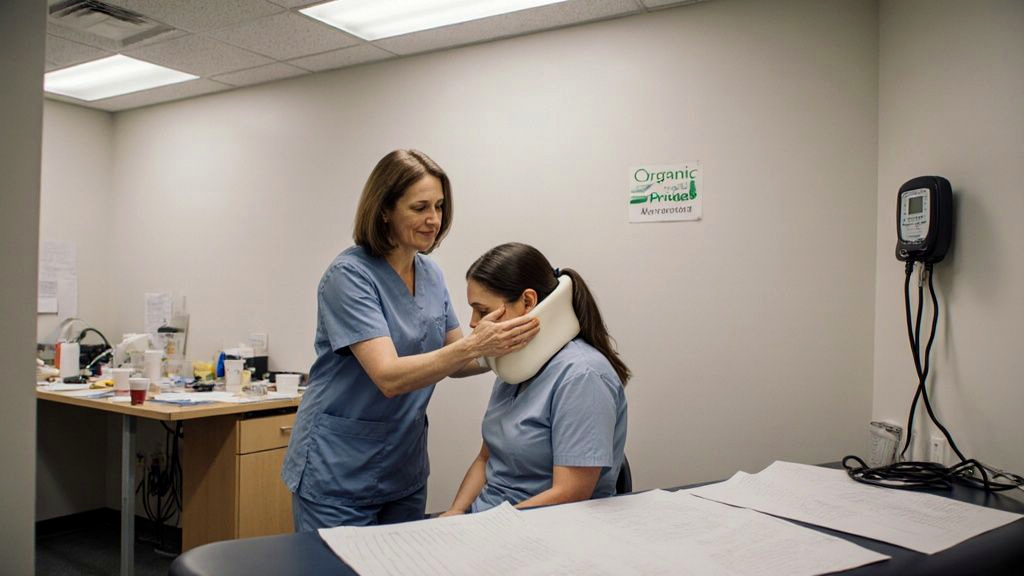
Neck strain, often called whiplash, is one of the injuries we see most frequently in car accident claims. It is commonly associated with rear-end collisions, which are a regular occurrence on I-10 and the surface streets around New Orleans. Because the specifics of any neck injury vary from person to person, diagnosis and treatment are matters for a medical provider.
Neck injuries can range from short-term soreness to lasting problems, and their effects are not always visible on the day of the crash. For a claim, what matters is that every symptom you report is written into your medical records, because those records are what connect the injury to the collision.
Traumatic Brain Injuries and Concussions
Head injuries, including concussions and other traumatic brain injuries (TBI), are another category that appears frequently in crash claims. One challenge with these injuries is that they are not always visible from the outside, which is part of why thorough medical evaluation and documentation matter so much for a claim. What a specific injury involves, and how it should be treated, are questions for a qualified medical professional, not a law firm.
When symptoms appear or change over time, keeping notes and following up with your providers helps ensure the record reflects the full picture. That record is often central to how a claim is evaluated.
Broken Bones, Lacerations, and Internal Injuries
More visible injuries such as broken bones, deep cuts, joint sprains, and internal injuries also appear regularly in crash claims and can require significant medical care and time away from work. Even an injury that looks minor at first can turn out to be more serious, which is one more reason complete medical documentation is important to a claim. As with any injury, evaluation and care decisions belong with your medical team.
Spinal Injuries and Paralysis
In the most serious cases, crashes can involve spinal injuries with long-term consequences and substantial future care needs. When injuries are this severe, having the full extent of the harm properly documented by medical professionals is essential to a fair evaluation of the claim, because the long-term cost of care is central to what a claim is worth.
The Hidden Car Accidents Injuries: PTSD and Emotional Trauma
Not every serious injury shows up on an X-ray. Some crash survivors experience post-traumatic stress, anxiety, or depression after a collision, with reactions such as intrusive memories, trouble sleeping, or unease about driving. These are recognized conditions, and support is available. Whether a given person is affected, and how, is something for a qualified mental health professional to assess.
For a claim, the important legal point is that Louisiana law recognizes mental anguish and loss of enjoyment of life as compensable damages, not afterthoughts. When emotional effects are part of an injury, treatment records help document that part of a claim just as they do for physical injuries.

How Delayed Injuries Affect Your Legal Rights
Delayed injuries create a legal problem that has nothing to do with your honesty and everything to do with how insurers operate. If your neck starts hurting two weeks after the crash and that is the first time it appears in a medical record, the adjuster may argue the pain came from your gym, your desk job, or a pre-existing condition, anything but their insured driver.
You counter that argument with documentation and consistency. Seeing a doctor promptly, keeping your appointments, and making sure providers record everything you report all help tie your injuries to the crash. Save the crash photos, the police report, and a simple day-by-day journal of your symptoms. If you are unsure how the process works, our overview of the timeline for car accident settlements explains how thorough records shorten the road to a fair result. And before giving any recorded statement to an insurer, it is worth talking to an experienced car accident lawyer, because an offhand comment can be taken out of context in ways that hurt a claim.
Your Legal Rights After a Car Accident in Louisiana
If another driver’s negligence caused your crash, Louisiana law gives you the right to pursue compensation for the scope of your harm. That can include past and future medical expenses, lost wages and diminished earning capacity, vehicle damage, pain and suffering, mental anguish, and loss of enjoyment of life. In ordinary negligence cases, Louisiana does not cap most personal injury damages, though certain claim types can differ, and the value of any claim depends on the specific facts, including the severity and permanence of the injuries. Because Louisiana follows pure comparative fault (La. Civil Code art. 2323), being found partly at fault reduces a recovery by your percentage of fault rather than barring it.
Two Rules That Shape a Louisiana Claim
For injuries arising on or after July 1, 2024, Louisiana’s prescriptive period (its version of a statute of limitations) is generally two years from the date of the accident to file suit, which in Louisiana is done by filing a petition (La. Civil Code art. 3493.11, Act 423 of 2024). Injuries before that date generally fall under the older one-year period, and certain claims, such as those involving government entities, medical malpractice, or maritime law, follow different rules. Deadlines are fact-specific, so confirm yours with an attorney.
Louisiana also follows pure comparative fault (La. Civil Code art. 2323). If you share some of the blame, your recovery is reduced by your percentage of fault, but you are not automatically barred from recovering. That is different from the modified 50 or 51 percent bar rule used in some other states.
Because injuries so often surface late, a sensible approach is to treat every crash as if it could involve serious harm. Get evaluated, document everything, and get advice before you settle. Even a wreck that looks minor can leave lasting damage, and our guide on whether you need counsel after a seemingly injury-free collision walks through when it makes sense to call. When a loss is catastrophic, families may also want to understand their options under the rules covered in our resource on legal rights after a fatal crash.
There is no rush to settle before you heal. Insurance companies sometimes push a fast, low settlement in the first days, before the full extent of an injury is known. Once you sign a release, you generally cannot reopen the claim if a strain later turns out to be more serious. A personal injury attorney who handles car accident cases can help make sure a claim reflects the full extent of your injuries, not just your first bad week.
For national context on how common crash injuries are, the National Center for Statistics and Analysis reported an estimated 2.44 million people injured in U.S. traffic crashes in 2023. You can review the underlying figures through the National Highway Traffic Safety Administration crash data, and general prevention information through the NHTSA road safety resources.
Frequently Asked Questions About Car Accidents Injuries
The body’s stress response can mask pain right after a collision, and some injuries take time to become noticeable. Medical and safety sources have long described this pattern. Feeling okay at the scene is not proof you are uninjured, which is why a prompt medical evaluation, and the record it creates, matter for both your health and a potential claim. Any symptoms should be assessed by a licensed provider.
Often, yes. Delayed diagnoses are common and legally recognized. The key is connecting the injury to the crash through consistent medical records, so it helps to see a doctor as soon as symptoms appear and to document what you experience.
It can be. Louisiana allows recovery for mental anguish and loss of enjoyment of life. Emotional conditions tied to a crash can be part of a claim, and treatment records help support that part of it. Whether someone is affected is a question for a qualified health professional.
It depends on when the injury occurred and the type of claim. For injuries arising on or after July 1, 2024, the prescriptive period (statute of limitations) is generally two years; injuries before that date generally fall under the older one-year period, and some claims follow different deadlines. Because the rules have exceptions, it is best to speak with an attorney early.
Hurt in a Crash Around New Orleans?
Free consultation, no obligation. We help Louisiana crash victims document their injuries and pursue fair compensation.
(504) 888-7777Serving Orleans and Jefferson Parish • No fee unless we win; clients may be responsible for case costs and expenses • Se Habla Español
About Sean Regan Law: Sean Regan Law is a personal injury firm in New Orleans, Louisiana, serving Orleans Parish, Jefferson Parish, and surrounding communities. Sean Regan is a New Orleans native and a graduate of LSU and Loyola Law School. Our team investigates the factors behind a crash, works with medical and accident reconstruction professionals, and works to document and value the full extent of a client’s injuries. The firm has recovered over $35 million in settlements for clients throughout Louisiana. Results may vary, and past results are not a guarantee of future outcomes. We are available 24/7 at (504) 888-7777.
Reviewed by Sean Regan, Sean Regan Law. Last updated August 2026.
This article provides general information about the legal claims process in Louisiana and is not legal, medical, tax, or financial advice. Reading it or contacting the firm does not create an attorney-client relationship. Every case is different; for advice about your situation, speak with a licensed Louisiana attorney, and for any medical concern, consult a qualified healthcare provider.