


Suing for Slip and Fall: When You Truly Have a Valid Case
What This Guide Covers: A bruised hip and a wet floor do not automatically add up to a lawsuit. Suing for slip and fall in Louisiana means proving that someone who controlled the property knew about a hazard, failed to fix or warn about it, and that their failure caused you real, documented harm. This guide breaks down the legal elements that make a claim viable, the everyday circumstances that quietly sink one, and how Louisiana’s merchant liability statute and its new comparative fault rules decide whether your case is actually worth pursuing.
Most people who fall on someone else’s property never call a lawyer, and for many of them that is the right choice. A quick stumble with no lasting injury is not a lawsuit. But the opposite mistake is far more expensive: assuming you have no case when a genuine hazard, a negligent owner, and a serious injury all line up in your favor. Below is the honest framework we use with callers across the Greater New Orleans area, so you can size up your own situation before you ever pick up the phone.
What Suing for Slip and Fall Actually Requires
A slip and fall claim is a type of premises liability case. The core idea is simple: people who own or manage a property have a duty to keep it reasonably safe for the visitors they invite in. When they break that duty and someone gets hurt, they can be held financially responsible. Winning, though, requires proving four separate things. Miss any one of them and the case falls apart, no matter how badly you were injured.
1. A Hazardous Condition Existed
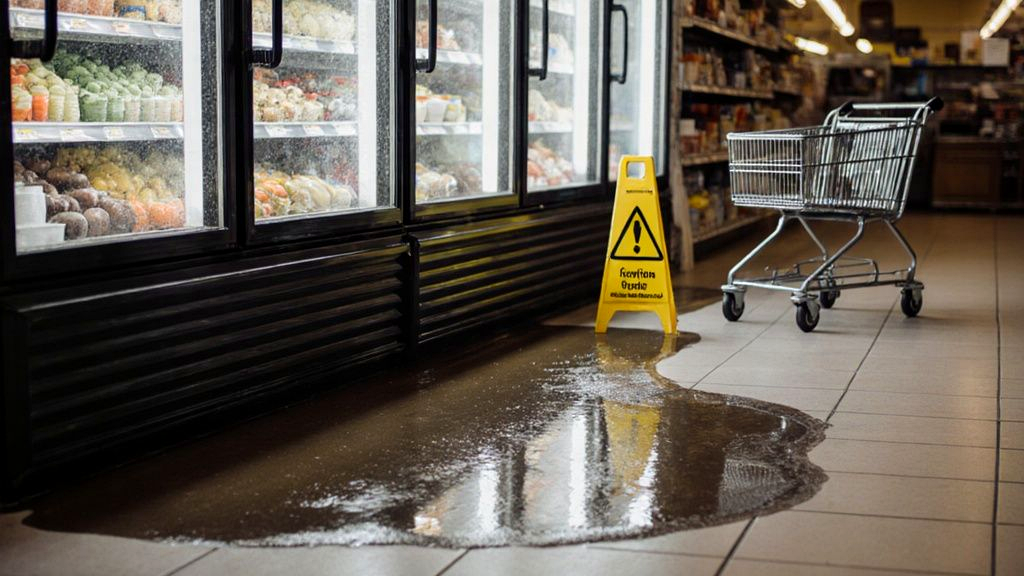
There has to be an actual dangerous condition, not just a fall. A puddle from a leaking cooler, a freshly mopped floor with no sign, a torn rug, an unlit stairwell, a broken handrail, or ice on a walkway all qualify. If the floor was clean, dry, and level, the fact that you tripped over your own feet is not enough. The condition must be something a careful property owner should have addressed.
2. The Owner Knew or Should Have Known
This is the element that decides most cases. You generally must show the owner either created the hazard, actually knew about it, or should have discovered it through reasonable inspection and had time to fix it. A spill that happened thirty seconds before you slipped rarely creates liability. A spill that sat for an hour under a leaking freezer, with employees walking past it, is a very different story.
3. The Hazard Caused Your Fall
The dangerous condition has to be the reason you fell, and the fall has to be the reason you were injured. Insurers love to argue that a pre-existing back problem, not their client’s wet floor, is the real source of your pain. Clear medical documentation that links your injury to this specific incident is how that argument gets defeated.
4. You Suffered Real Damages
Finally, you need genuine losses: medical bills, lost income, ongoing pain, or a lasting limitation. Embarrassment and a sore wrist that heals in two days will not support a lawsuit. A fractured hip, a torn rotator cuff, a concussion, or a spinal injury that changes how you live absolutely can.
Louisiana’s Merchant Liability Law Sets a High Bar
If your fall happened in a store, restaurant, or other business open to the public, a specific statute controls your case. Under Louisiana Revised Statute 9:2800.6, an injured customer carries the full burden of proof, and that burden is heavier than in most states. You have to show the hazard presented an unreasonable risk that was reasonably foreseeable, and, critically, that the merchant either created it or had actual or constructive notice of it before the fall.
Constructive notice is the sticking point. It means proving the condition existed long enough that the business should have caught it. Louisiana courts have thrown out claims where the injured person could not show how long a spill had been on the floor, even when the injury was severe. That is exactly why the moments right after a fall matter so much, and why guessing about the law on your own is risky. Knowing when to hire a slip and fall attorney can be the difference between meeting that burden and losing on a technicality.
When You Have a Valid Case, and When You Do Not
Not every fall is a lawsuit, and an honest lawyer will tell you so. Understanding which situations tend to produce strong claims helps you avoid both wishful thinking and the more common error of walking away from a legitimate case.
Situations That Often Support a Strong Claim
Cases tend to be viable when the hazard was obvious to the business but not to you: a leak the staff knew about, a spill left unattended in a busy aisle, a stairway with a missing handrail, poor lighting in a parking garage, or a recurring problem the owner ignored. They get stronger still when your injury is serious and well documented, when there is video or witness testimony, and when you reported the fall and sought care right away. These are the fact patterns where suing for slip and fall genuinely makes sense.
Situations That Usually Do Not
Claims struggle when the danger was open and obvious and easily avoided, when you were distracted by your phone or wearing unsafe footwear, when there is no proof the owner knew or should have known, or when the injury is minor and fully healed. A hazard you clearly saw and chose to walk through gives the defense a powerful comparative fault argument. None of this means give up automatically, but it does mean these facts need an honest look before anyone files suit.
The 51% Fault Rule and the Deadline You Cannot Miss
⚠ Why the Fault Rule Change Matters
As of January 1, 2026, Louisiana moved from a pure comparative fault system to a modified comparative fault rule. If a jury assigns you 51% or more of the blame for your own fall, you recover nothing at all. If your share is 50% or less, your compensation is simply reduced by your percentage of fault.
In slip and fall cases this is enormous. The defense will argue you were not watching where you walked, that the hazard was obvious, or that your shoes were to blame, all to push you over that 51% line. Fighting those inflated fault arguments is one of the most important jobs a experienced slip and fall lawyer does for you.
There is also a hard clock. For accidents on or after July 1, 2024, Louisiana gives you two years from the date of injury to file suit. Wait too long and the court will refuse to hear the case regardless of how strong it is. Evidence also fades fast: surveillance video gets overwritten, spills get cleaned, and witnesses forget. Acting early is not about pressure, it is about preserving the proof your claim depends on.
The Real Cost of a Serious Fall
People underestimate slip and fall injuries because the word “fall” sounds minor. The reality for a broken hip, a herniated disc, or a head injury is anything but. Recovery rarely happens overnight. It arrives piece by piece, and the losses reach far beyond the first hospital bill.

A fracture can mean surgery, weeks of limited mobility, and months of physical therapy. Chronic pain disrupts sleep, and exhaustion feeds anxiety and low mood. Many injured people describe a hard loss of independence: needing a ride to appointments, needing help with tasks they once breezed through. A head injury can quietly scramble focus and memory in ways loved ones notice first. These effects are real, they are compensable, and a proper claim accounts for them.
That is why Louisiana law lets you pursue more than just medical bills. You can seek lost wages and reduced earning capacity, future medical and rehabilitation costs, and non-economic damages for pain, mental anguish, and loss of enjoyment of life. Putting a fair number on those lasting effects is detailed work, and it is a central part of how we maximize a slip and fall settlement rather than let an insurer lowball it.
How to Protect Your Claim From the First Minute
What you do in the hours and days after a fall shapes everything that follows. A few simple steps preserve the evidence that Louisiana’s notice requirement demands.
Report It and Get It in Writing
Tell a manager or employee immediately and ask that an incident report be created. Get the names of any staff and witnesses. A same-day report makes it far harder for the business to later claim the hazard never existed.
Photograph the Hazard Before It Disappears
Take pictures and video of the spill, the ice, the broken step, the missing sign, and the surrounding area from several angles. Capture your shoes and your injuries too. This is the evidence that so often decides the constructive notice question, and it vanishes within minutes once cleanup begins.
See a Doctor Promptly
Some serious injuries, including concussions and spinal damage, do not show their full effect for days. Prompt medical care protects your health and creates the record that ties your injury directly to the fall.
Do Not Give a Recorded Statement First
The property’s insurer may call quickly and sound friendly. Anything you say can be used to shift blame onto you. It is reasonable to decline a recorded statement until you have spoken with an attorney.
Warning: Insurers know most people never verify the notice requirement or the two-year deadline. They may delay, downplay your injury, or offer a fast, low settlement while the clock runs. A quick check-in with a lawyer costs nothing and stops those tactics from quietly closing the door on a valid claim.
Frequently Asked Questions About Suing for Slip and Fall
There is no fixed dollar cutoff, but the injury generally needs to involve real medical treatment and lasting effects, not a bruise that heals in a few days. Fractures, surgeries, head injuries, and injuries that keep you out of work are the kinds of harm that justify a claim. A free consultation is the fastest way to learn where your case stands.
You can still recover as long as your share of fault is 50% or less under Louisiana’s modified comparative fault rule. Your compensation is reduced by your percentage of responsibility. If you are found 51% or more at fault, however, you recover nothing, which is why fighting inflated blame is so important.
Possibly, but it is harder. Louisiana law requires proof the hazard existed long enough that the business should have known about it. If the spill was cleaned before you can document how long it was there, your evidence weakens. Photos, video, and witness accounts taken at the scene are often what save these claims.
For accidents on or after July 1, 2024, you have two years from the date of injury. Accidents before that date fell under a one-year deadline. Missing the deadline permanently bars your claim, so it is wise to consult an attorney well before it approaches.
Most slip and fall claims settle without a trial. A strong, well-documented case is often what motivates a fair offer. Your attorney handles the negotiation and only goes to court if the offer does not reflect the true value of your losses.
Do Not Let an Assumption Cost You a Valid Claim
The most expensive mistake after a fall is deciding, without any real information, that nothing can be done. If a genuine hazard, a business that ignored it, and a serious injury all came together in your case, Louisiana law may well be on your side. The only way to know is to have the facts reviewed by someone who does this every day.
Hurt in a Fall That Was Not Your Fault?
Free consultation. No obligation. No fees unless we win.
(504) 888-7777Free consultation to discuss your slip and fall case • No Fees Unless We Win • Se Habla Español
About Sean Regan Law: Sean Regan is a New Orleans native and personal injury attorney whose firm has recovered over $35 million for injured clients across Louisiana. Results may vary, and past results are not a guarantee of future outcomes. The firm investigates every source of liability, preserves the evidence these cases turn on, and is available 24/7, including holidays, at (504) 888-7777.